How Track and Field Athletes Can Use an AI Chat Coach Whenever Training Feels Uncertain
Updated July 15, 2026
By the traqqer Editorial Team
While building a training plan, doubts appear quickly: “Does this combination make sense?” “My fatigue is not clearing. Should I rest?” For athletes without a coach nearby, making every decision alone can become stressful.
traqqer’s AI Chat is a training partner you can consult at any time. Its greatest value is not providing a perfect answer, but helping you organize the situation and consider options.
Quick Answer: What Is an AI Running Coach?
An AI running coach is a chat or recommendation tool that uses the context you provide to suggest questions, options, or draft training ideas. It is most useful for organizing information and exploring alternatives. It should not make medical diagnoses, override pain signals, or replace the final judgment of the athlete and coach.
| AI can help with | Keep with a person |
|---|---|
| Summarizing training history | Diagnosing pain or illness |
| Generating workout alternatives | Deciding whether an injury is safe to train through |
| Planning backward from a meet | Making high-stakes return-to-sport decisions |
| Turning a vague concern into questions | Interpreting context the system cannot observe |
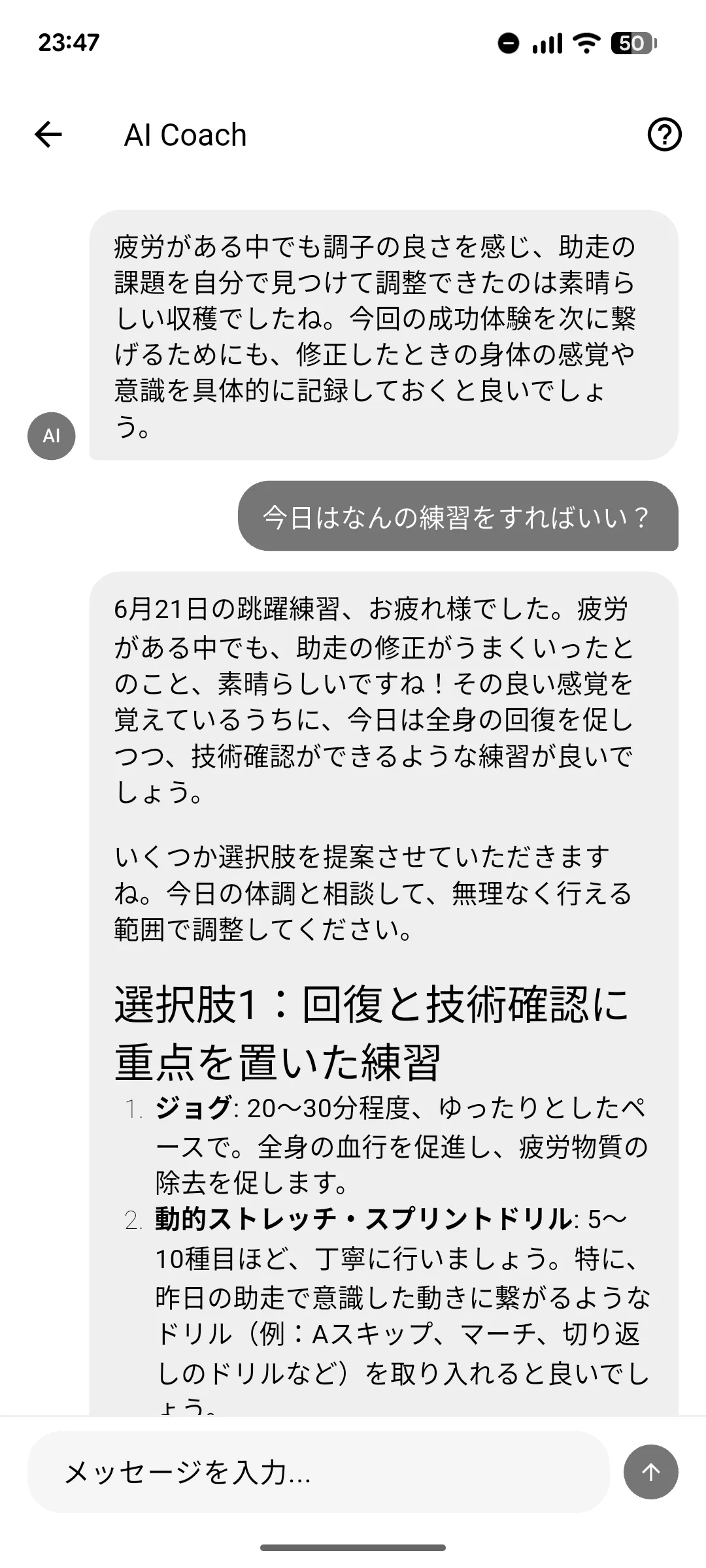
Use AI as a Sounding Board
“Give me the best possible workout” is too vague to produce a useful answer. Instead, add your situation, goal, and constraints:
- “My legs feel tight this week. How should I adjust for a meet this weekend?”
- “My 150 m time has plateaued. Help me list possible reasons.”
- “Tomorrow is a key session, but it will rain. Give me three alternatives.”
Specific context produces more specific options.
Ask Questions in the Context of Your Records
AI Chat can use the training context saved in traqqer. That makes routine notes and condition entries directly useful:
- A note such as “right hamstring feels tight” can support a suggestion that avoids jumping
- RPE and condition trends provide context for whether to push or recover
- A saved competition schedule supports planning backward from race day
The more useful context you record, the better the conversation becomes. The cycle of record, ask, and apply can also make the reason for journaling clearer.
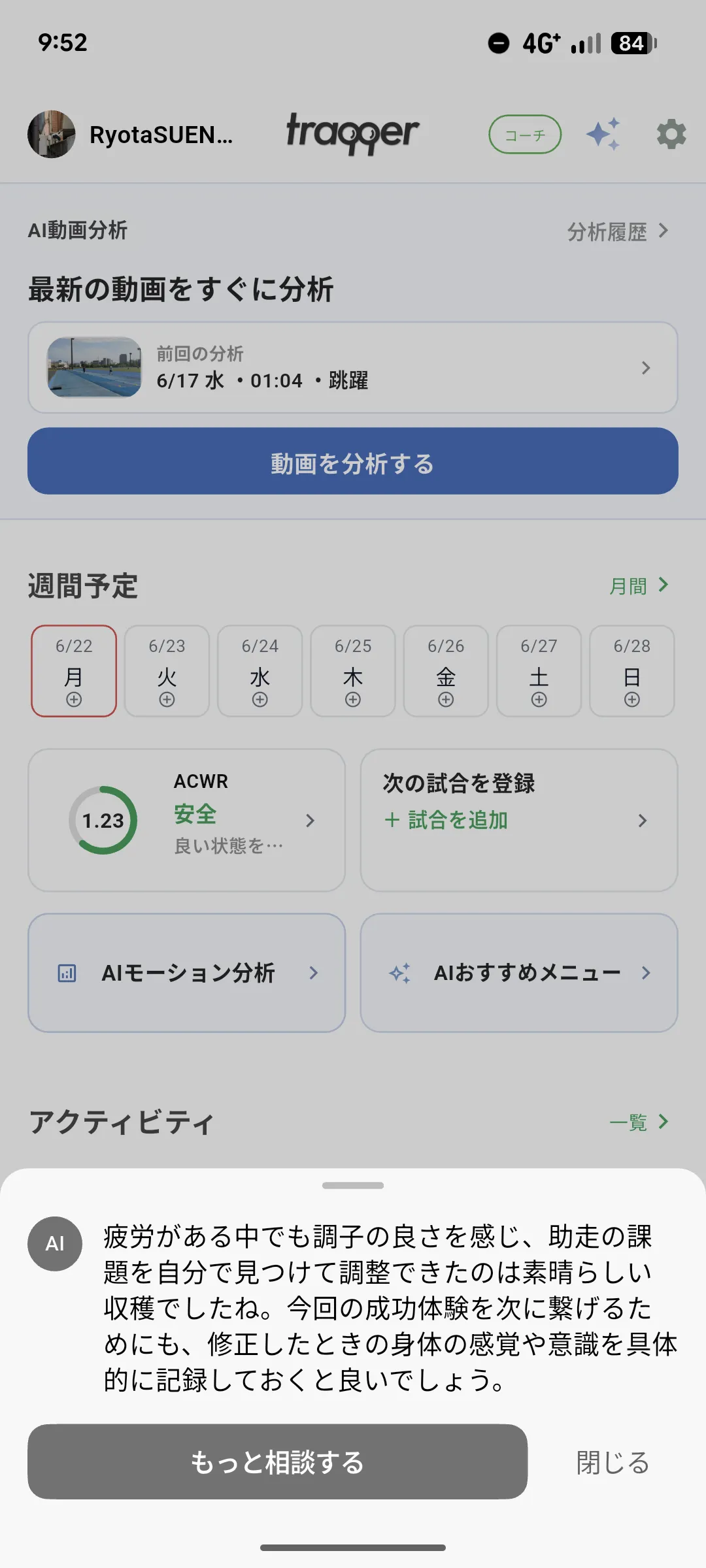
traqqer also provides automatic AI coach feedback after an activity is recorded. This can be an easy first outside perspective before you start a longer chat.
A Prompt Template That Works
Use this structure:
Current situation: I am experiencing ___. Goal: I want to achieve ___. Constraints: I have ___. What options should I consider?
For example: “I have felt unusually tired for three consecutive days. I want to run a personal best at the regional meet in two weeks, and I can train for only one hour on weekdays. How should I approach the next few days?”
Important Limits
- Treat an AI suggestion as a draft. You and your coach, if you have one, make the final decision.
- Pain or health concerns may require a qualified medical professional rather than an AI conversation.
- Ask why a recommendation makes sense instead of accepting it automatically. The explanation can help you build your own judgment.
Summary
AI Chat can be available around the clock, but it is most useful as a partner for organizing thoughts and expanding options. When training feels uncertain, describe the situation clearly and use the response as input to your own decision.
Frequently Asked Questions
Is an AI running coach free?
Some products offer free conversations or a limited free plan, while others require a subscription. Compare whether the free allowance is enough to test a realistic training week and whether useful history is retained.
What information should I give an AI coach?
Include your event, recent training, current condition, goal, available time and equipment, competition date, and any constraints. Avoid sharing personal information that the service does not need.
Can an AI coach replace a human coach?
No. AI can provide ideas and structure, but a human coach can observe the athlete, understand team and life context, and take responsibility for nuanced decisions. The two can be complementary.
Related Articles
- How AI-recommended workouts work
- How to use RPE and ACWR
- Tapering before competition
- How to choose a track and field app
References
Start Your Journey with traqqer
traqqer is an AI-powered app that helps you build better habits.
Download now and transform your daily routines for a better life.
