What Is RPE? How to Read It and Use It with ACWR
Updated July 15, 2026
By the traqqer Editorial Team
How hard did today’s run feel? “Normal” and “pretty difficult” are useful impressions, but converting them to a number from 1 to 10 makes the trend easier to record. That is the purpose of RPE, the Rating of Perceived Exertion.
In short: RPE is an athlete’s rating of how hard a session felt. Multiply session RPE by duration in minutes to create a simple internal-load estimate, then read that number alongside condition, performance, and training context—not by itself.
What Is RPE?
Gunnar Borg developed an early 6–20 scale so that the value multiplied by ten roughly corresponded to heart rate for many people. Modern sport settings often use a simpler category-ratio scale from 1 to 10, which is also the range used in traqqer.
| RPE | Description |
|---|---|
| 1 | Very easy |
| 2 | Easy |
| 3 | Somewhat easy |
| 4 | Moderate |
| 5 | Somewhat hard |
| 6 | Hard |
| 7 | Very hard |
| 8 | Extremely hard |
| 9 | Near maximal |
| 10 | Maximal |
RPE is subjective, but that is part of its value. It can reflect the combined effect of fatigue, heat, hydration, sleep, and mental state when one objective measure cannot capture the whole experience.
Entering RPE in traqqer
traqqer’s Quick Entry includes an RPE sheet with a 1–10 slider, haptic feedback, color changes, and a field for training time.
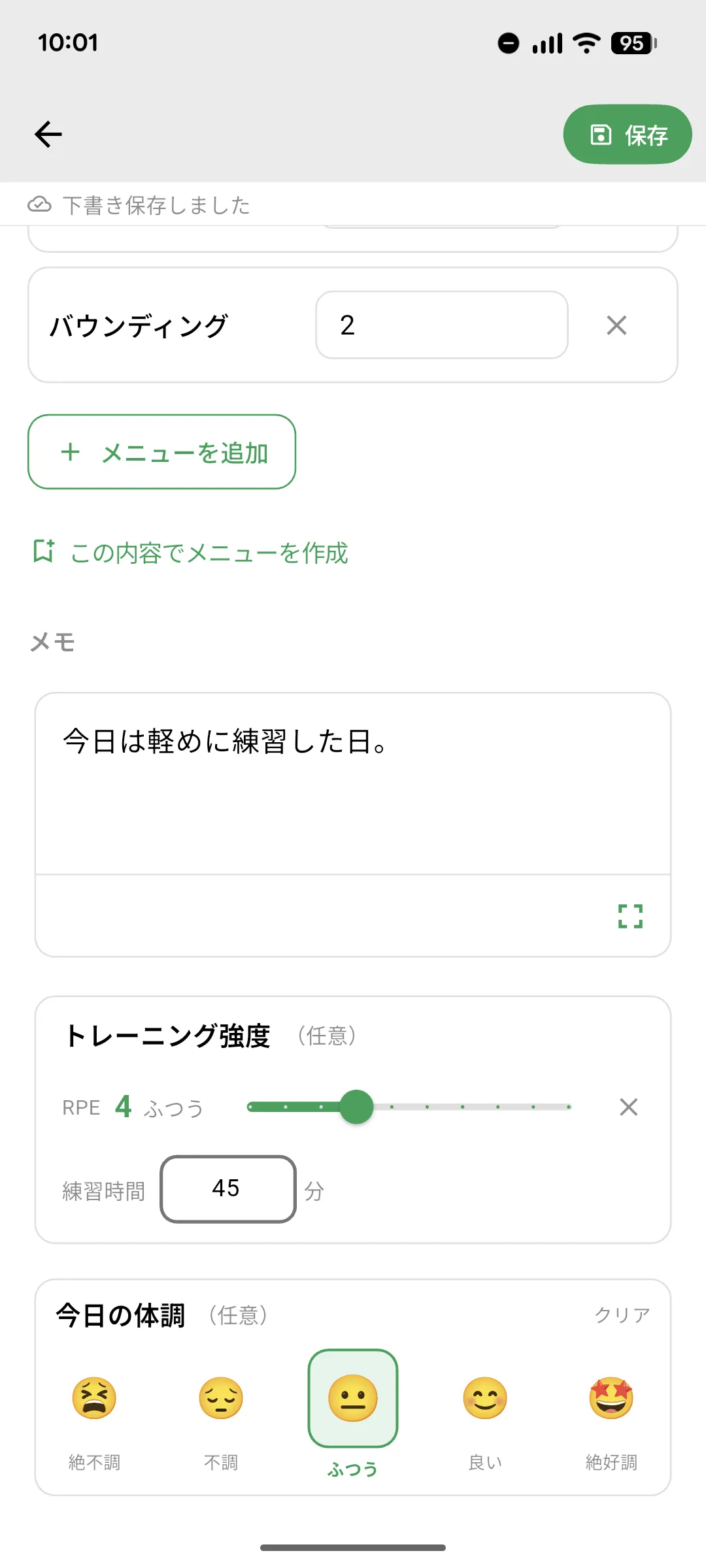
The colors progress from green through orange to red as the selected effort rises. RPE and duration are then converted into a simple session-load estimate:
Session load = RPE × training duration in minutes
This is commonly called the session-RPE, or sRPE, method.
Three Metrics in the Statistics View
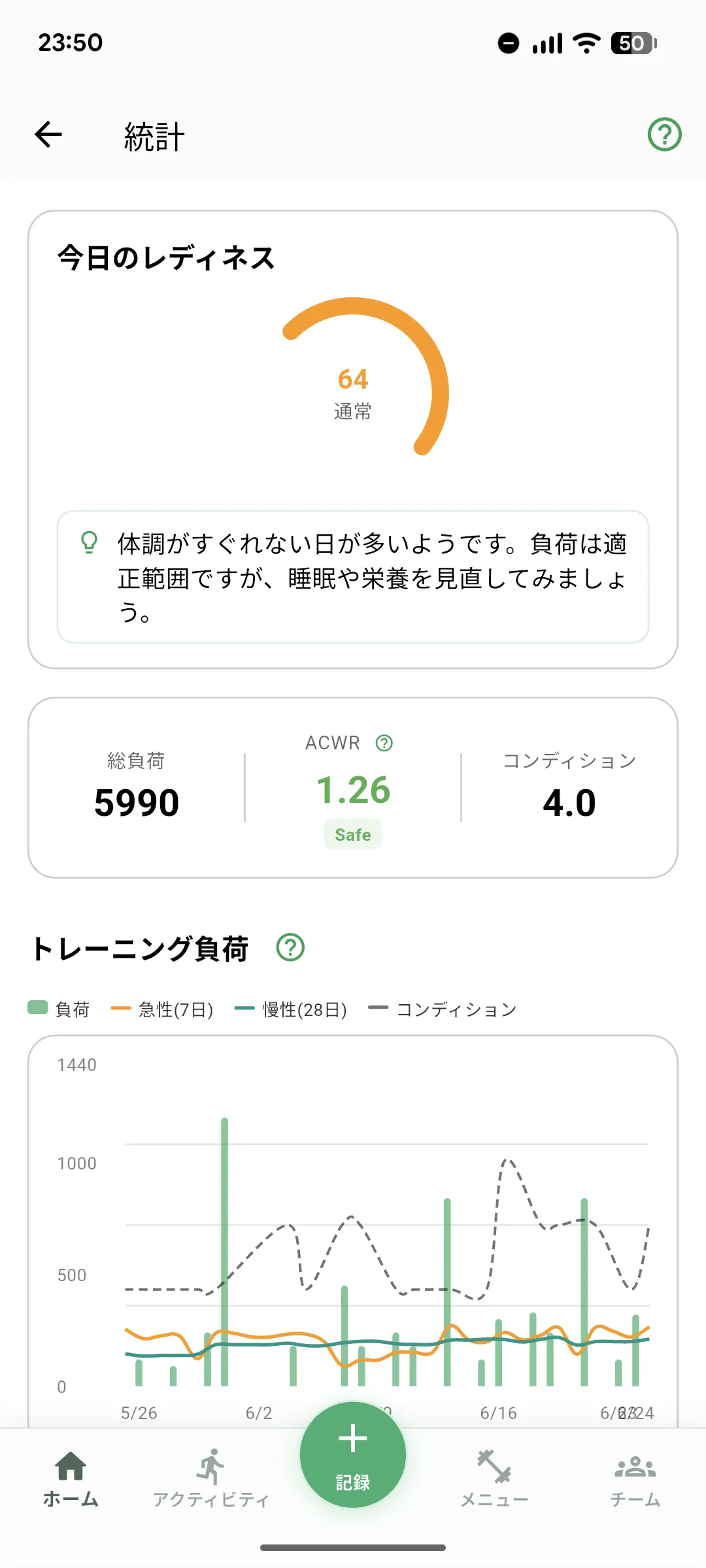
1. Total Load
Total load adds the daily sRPE values across the selected period. It provides a quick view of whether estimated training load increased or decreased compared with a previous period.
2. Acute:Chronic Workload Ratio
ACWR compares a recent short-term load with a longer baseline:
- Acute: average load over the most recent seven days
- Chronic: average load over the most recent 28 days
- ACWR = acute ÷ chronic
For example, an acute load of 1,400 AU and a chronic load of 1,500 AU produces an ACWR of 0.93.
traqqer presents this ratio with status colors and waits until enough data has accumulated before treating it as established. Earlier ACWR literature proposed ranges such as a 0.8–1.3 “sweet spot” and greater concern above 1.5. Later reviews have challenged treating these thresholds as reliable injury predictions. Use ACWR as a trend indicator, not a diagnosis or forecast.
3. Average Condition
Athletes can optionally enter a daily condition score from 1 to 10. The average provides a subjective trend independent of calculated workload and can offer useful context when the ratio alone looks unremarkable.
Three Ways to Read the Data
1. Look for Sharp Increases
When the acute-load line moves well above the longer baseline, review what changed and whether recovery is keeping up. Sudden increases deserve attention even though no single ratio can predict an injury.
2. Compare RPE for the Same Workout
If the same run was RPE 4 last week and RPE 6 this week, recovery may be incomplete even when the time is unchanged. Repeated menu entries make this pattern easier to see.
3. Read It with Condition
A stable ACWR alongside a steadily falling condition score suggests that the ratio does not tell the whole story. Sleep, illness, stress, or other factors may require attention.
Summary
RPE requires no special device. Ten seconds after training can create a useful record, and several weeks of consistent entries reveal workload and condition trends that memory alone can miss. Let traqqer do the calculations, but keep the final interpretation grounded in context.
Frequently Asked Questions
When should I record RPE?
Use the same timing each session so the numbers remain comparable. Many athletes record a session-level rating shortly after training, once they can judge the whole workout rather than only the final repetition.
What is session RPE?
Session RPE is a simple training-load method: multiply the athlete’s overall RPE by session duration in minutes. A 60-minute session rated RPE 6 equals 360 arbitrary units.
Is a high ACWR an injury prediction?
No. ACWR summarizes the relationship between recent and longer-term load, but reviews have challenged fixed thresholds as reliable injury predictors. Use it to prompt a contextual review, not to declare that an injury will or will not occur.
Related Articles
- Recording pain and returning from injury
- Tapering before competition
- Three principles for in-season workouts
- How to choose a track and field app
References
Start Your Journey with traqqer
traqqer is an AI-powered app that helps you build better habits.
Download now and transform your daily routines for a better life.
