Record a Daily Condition Score in traqqer and Notice Early Warning Signs
Updated July 15, 2026
By the traqqer Editorial Team
Athletes often record times but not how they felt that day. A condition score adds the context needed to interpret later changes in performance and recovery.
Save Condition as a Score
When recording training in traqqer, add a score for the day’s condition. Turning “felt good,” “heavy,” or “still tired” into a number makes the trend easier to review alongside workouts and times.
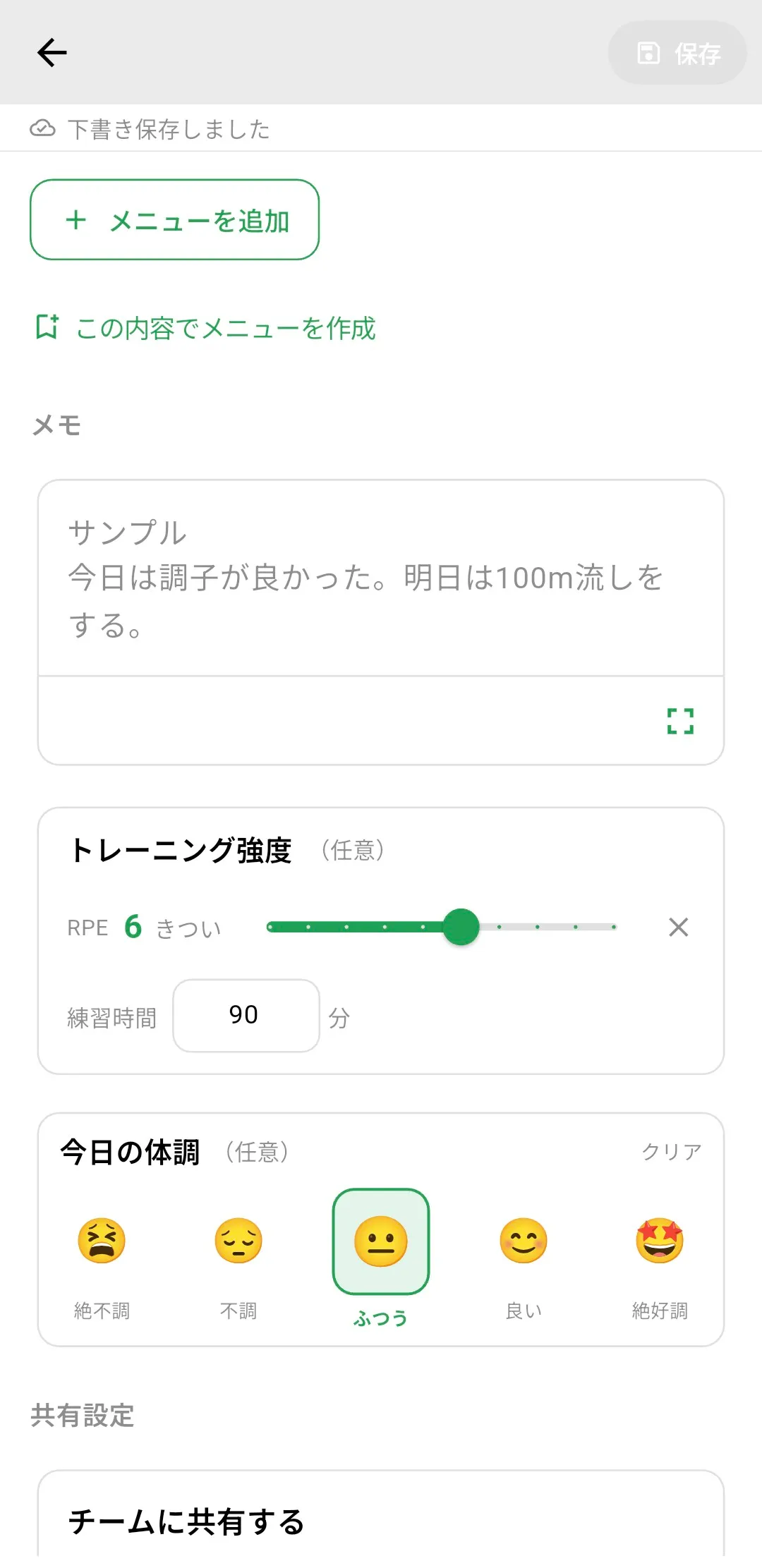
Notice an Early Decline
Injury or illness can feel sudden even when fatigue and heaviness were present earlier. A score recorded every day makes a multi-day decline easier to notice. Several low days may justify rest, a lighter session, or a closer look at recovery.
The score is not a diagnosis, but it can make a vague change visible before memory smooths it away.
Compare Condition with RPE
Condition becomes more informative when read alongside RPE. If a familiar workout suddenly feels much harder on a day with a low condition score, the combination provides stronger context than either number alone. Over time, you can see whether you are pushing through poor days or making good use of strong ones.
Record It Regularly
Condition can be useful even on a rest day because it shows whether recovery is progressing. Selecting the score takes only a moment. Repeated entries reveal a personal rhythm that is difficult to reconstruct afterward.
Start Your Journey with traqqer
traqqer is an AI-powered app that helps you build better habits.
Download now and transform your daily routines for a better life.
