Turn Movement into Numbers: Using AI 3D Pose Analysis to Describe What You Feel
Updated July 15, 2026
By the traqqer Editorial Team
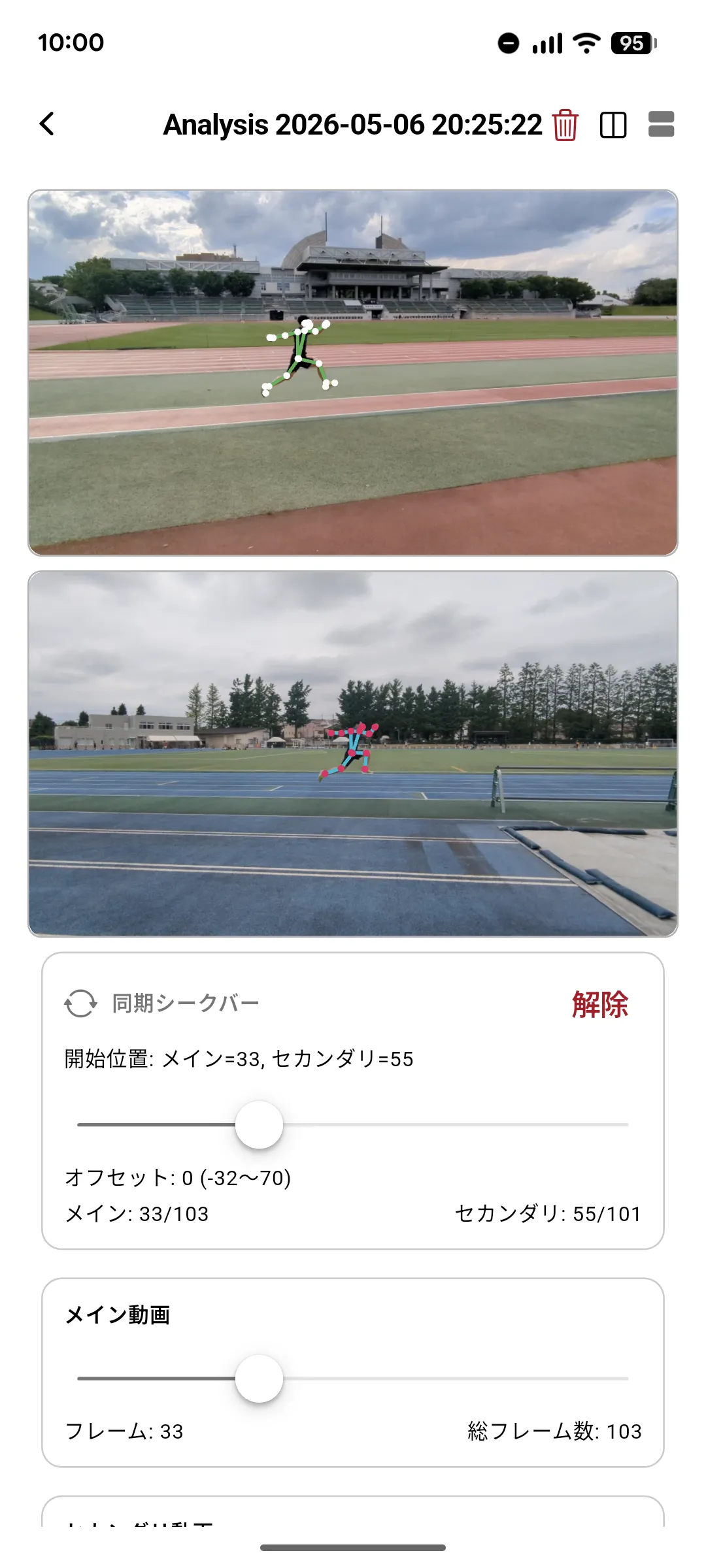
“Your hips are dropping.” “Your foot is landing too far ahead.” These are familiar coaching cues, but how much the hips drop or how far the foot reaches often remains unclear. traqqer’s AI 3D Analysis estimates body posture from video and turns subjective observations into numbers and diagrams.
What Is 3D Pose Analysis?
AI pose-estimation technology can identify the positions of joints in ordinary video without attaching special markers or using a laboratory motion-capture system. A 3D system extends that estimate into depth.
This makes it increasingly practical to approximate measurements that once required a lab:
- Hip, knee, and ankle angles
- Trunk lean and rotation
- Differences between the left and right sides
Why Turn Words into Numbers?
Technical coaching is difficult because the same words can mean different things to different people. The athlete and coach may imagine different positions when they say “land farther forward.”
3D analysis can reduce that ambiguity:
- “Not enough forward lean” can be discussed as a trunk angle
- Left-right differences become easier to identify
- The same measure can be compared before and after a correction
Numbers are not the goal. They are reference lines for discussing movement. Ask whether you moved closer to the intended technique, not merely whether a number increased or decreased.
Where to Use It in traqqer
traqqer analyzes an uploaded video, saves the result, and makes it available for later comparison. Useful applications include:
- Checking drill quality: Did the intended joint action appear?
- Documenting a technique change: Compare posture before and after the change
- Reviewing a return from injury: Look for protective movement or persistent asymmetry
Where 2D video analysis helps describe the overall action and important phases, 3D analysis helps examine a specific movement in more detail. Used together, they provide both a broad and a close view of form.
Keep These Limits in Mind
- Accuracy depends heavily on the recording. Use bright footage with the whole body clearly visible.
- Look for repeatable trends rather than reacting to one number.
- A measurement describes what the system detected; it does not define the ideal technique. The target depends on the event and the athlete.
Summary
AI 3D analysis helps translate sensation into language and language into measurements. When an observation becomes a shared reference point, athletes and coaches can discuss improvement more concretely.
References
Start Your Journey with traqqer
traqqer is an AI-powered app that helps you build better habits.
Download now and transform your daily routines for a better life.
