How to Use a Workout-Planning App: Turning AI Suggestions into Results
Updated July 15, 2026
By the traqqer Editorial Team
When an AI workout app does not feel useful, the problem is often the workflow rather than the quality of the suggestion. If the purpose of the session is unclear, even a good recommendation is difficult to apply. Before asking for a plan, describe what you want to improve.
Two sprint sessions can have very different goals. A speed-stimulus day prioritizes output, while a technique day prioritizes repeatability and movement quality. A clear purpose helps you choose among the suggested exercises and makes the post-session review more specific.
Give the system three pieces of information:
- Today’s purpose
- Your current fatigue and focus
- Constraints such as time, desired intensity, or proximity to competition
With traqqer, keep the sequence consistent: generate a suggestion, complete the session, record how it felt, and adjust next time. Perceived effort, concentration, and the feel of the movement are important inputs. A single workout cannot prove whether a menu is right, but several entries in the same format reveal patterns.
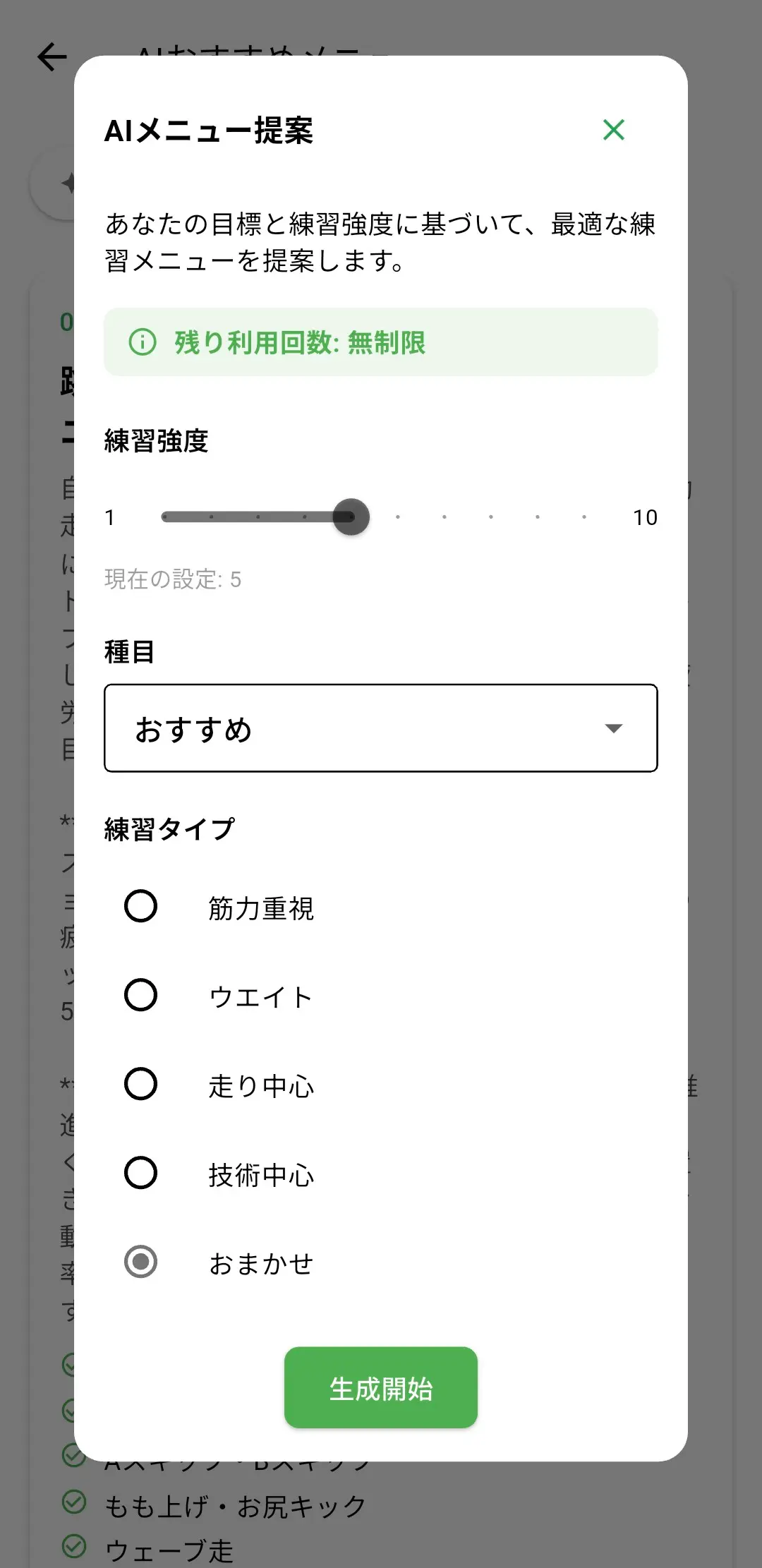
Do not pursue several themes at once. The more variables you change, the harder it becomes to understand what worked. One improvement theme per week is a practical starting point.
Use these rules:
- One improvement theme per week
- Always record subjective feedback after training
- Include the previous result when requesting the next suggestion
Why Sustainable Planning Matters
The World Health Organization reports that 31% of adults worldwide do not meet recommended physical-activity levels. It estimates that physical inactivity could create approximately US$300 billion in cumulative health-care costs from 2020 to 2030. A plan must therefore be repeatable as well as theoretically sound. Pairing each recommendation with a record and a later adjustment turns an isolated workout into a system.
Source
Summary
A workout-planning app is not just a place to receive suggestions. Give it a clear purpose, record the result, and use that result to improve the next plan.
Start Your Journey with traqqer
traqqer is an AI-powered app that helps you build better habits.
Download now and transform your daily routines for a better life.
