How Track and Field Athletes Can Turn a Training Journal App into Better Results
Updated July 15, 2026
By the traqqer Editorial Team
The athletes who take training most seriously often struggle to maintain a training journal. They try to write everything perfectly, the workload grows, and “I will fill it in tomorrow” eventually becomes several blank days. To make a journal useful, reduce the effort before adding more detail.
Quick Answer: What Should a Track Training Journal Include?
A useful track and field training journal should capture enough context to explain the session later: purpose, workout, result, perceived effort, condition, and one next action. A short entry completed consistently is more valuable than an exhaustive template used only occasionally.
| Field | Example | What it helps you review |
|---|---|---|
| Purpose | Acceleration quality | Whether the session matched the plan |
| Workout and result | 4 × 30 m, best 4.12 | What was actually completed |
| RPE and condition | RPE 7, condition 6/10 | How demanding the work felt |
| Technique note | Upright too early on rep 4 | What changed under fatigue |
| Next action | Keep first three steps patient | What to test next time |
Start by fixing the fields you record: the day’s purpose, the workout, how it felt, what went well, and one adjustment for next time. These five items support a useful review without requiring a long entry. A consistent format also makes it easier to compare weeks and notice the conditions associated with good or poor sessions.
Use the same five prompts each time:
- Today’s purpose
- Workout completed, including volume and intensity
- Perceived effort and focus
- What went well
- One adjustment for next time
With traqqer, make a short entry immediately after training and review the week later. Daily notes can be brief, but the weekly review should end by choosing one priority for the coming week. Otherwise, records accumulate without changing the next decision.
A common mistake is turning the journal into a written self-criticism exercise. Recording only what went wrong makes the habit feel heavier. Add one thing that went well and one concrete next step. A training journal is not a test of how hard you worked; it is a tool for making the next decision faster.
For a weekend review, look at only three things:
- What good sessions had in common
- How you felt the day before sessions that went poorly
- The one priority to carry into next week
Training Notes in traqqer
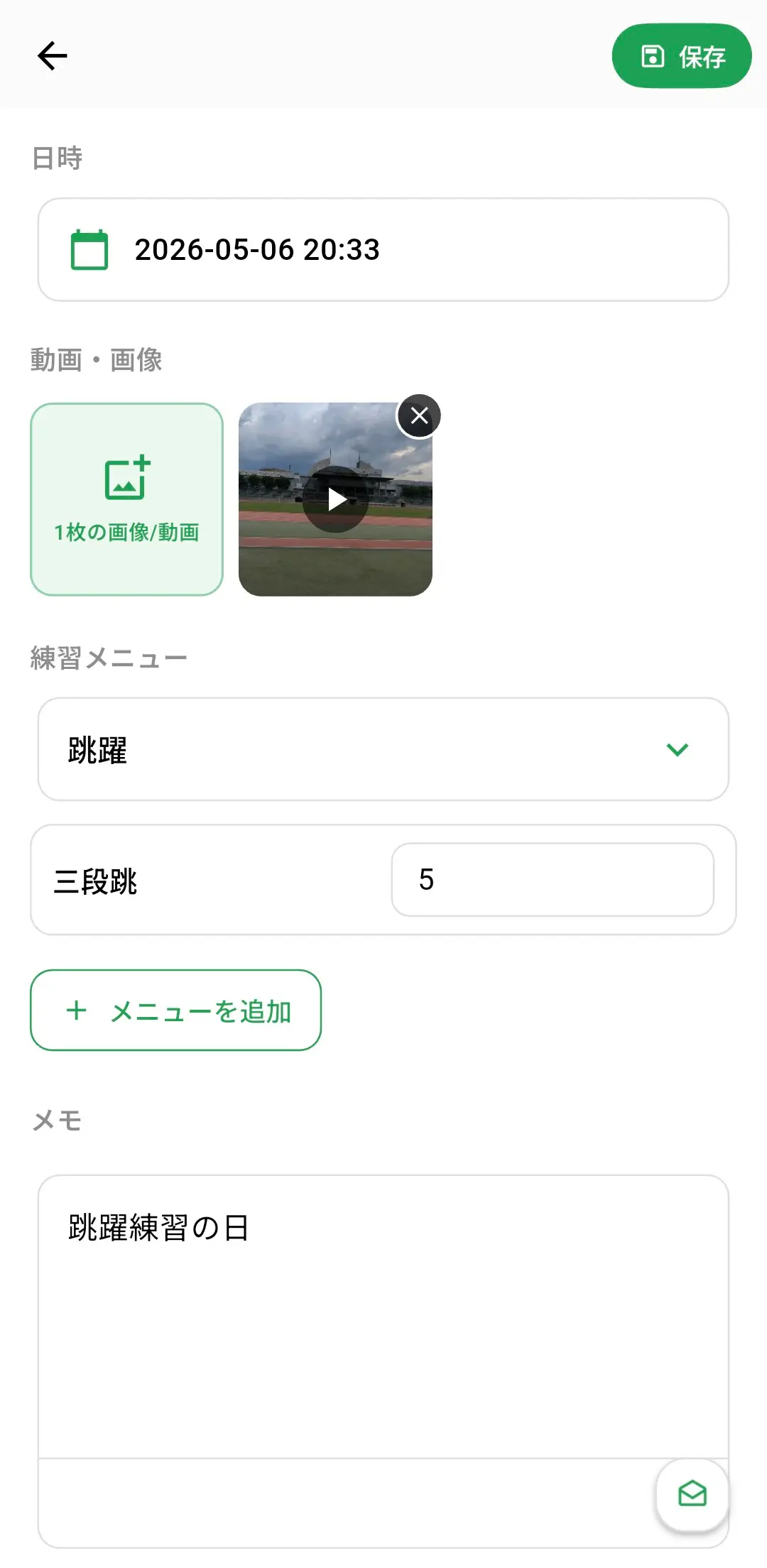
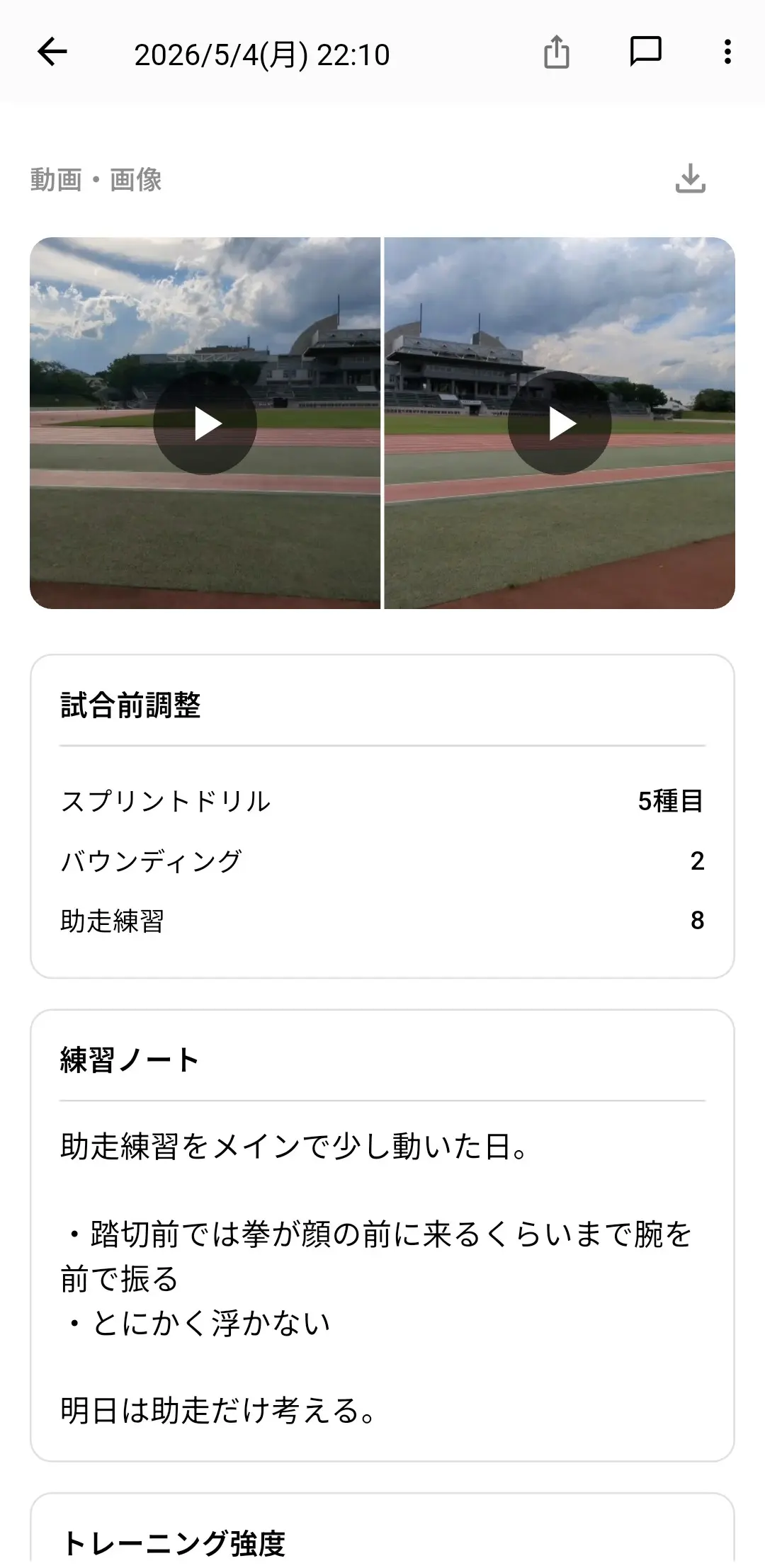
traqqer provides two ways to record training:
- A full activity entry
- Quick Entry
The full entry is for sessions where you want to attach video or photos and record detailed notes and condition data. Quick Entry is available from the weekly schedule on the home screen and requires only a menu selection and a brief comment. It makes it possible to leave a useful record even when time is limited.
What the Research Suggests
Habit research supports designing a journal for consistency. A study summarized by University College London found that it took an average of 66 days for a new behavior to approach automaticity. A separate meta-analysis of 12 randomized trials involving 1,693 healthy adults found that wearable-device interventions improved physical activity by SMD 0.449 (95% CI 0.10–0.80). Together, these findings support a low-friction system that combines self-recording with feedback over time.
- Habit formation took an average of 66 days in the UCL-reported study
- 12 randomized trials with 1,693 participants found improved physical activity (SMD 0.449)
Sources
- How long does it take to form a habit? — UCL
- Effectiveness of wearable activity trackers to increase physical activity and improve health — PMC
Summary
The key to a useful training-journal app is not writing more. Keep the fields consistent, make daily entries short, and pair them with a weekly review that selects one next action.
Frequently Asked Questions
Should I write in my training journal every day?
Record every meaningful training session, but keep low-information days brief. Consistency matters because patterns in effort, condition, and performance appear across multiple entries.
Is a paper diary or an app better for athletes?
Either can work. An app is useful when you want searchable history, statistics, video, and quick entry; paper may suit athletes who think better by writing. Choose the format you will review, not only the one you enjoy filling in.
How long should a post-training entry take?
Aim for a format you can finish while the session is still fresh—often one or two minutes. Add more detail only when it will help a future decision.
Start Your Journey with traqqer
traqqer is an AI-powered app that helps you build better habits.
Download now and transform your daily routines for a better life.
