How to Use a Form-Check App: A Consistent Review Process That Misses Less
Updated July 15, 2026
By the traqqer Editorial Team
When a form-check app does not lead to improvement, the problem is often the review process rather than the app. If you look at a different detail every time you watch a video, you cannot compare sessions or measure whether a correction worked. Consistent progress requires a fixed order and a fixed set of checkpoints.
Start with the movement as a whole, then inspect specific details, and finally compare the recording with the previous one. For the detailed review, keep using the same checkpoints: vertical head movement, shoulder tension, foot-strike position, pelvic stability, and whether form breaks down late in the effort. A stable checklist helps distinguish genuine progress from a single recording that merely looks better.
Use this three-stage review:
- Check the overall rhythm
- Identify an issue using your fixed checkpoints
- Compare with the previous video and choose one priority for the next session
Reviewing form about twice a week is realistic for most athletes. Use the first recording to identify a priority and a later recording to check the change. Constantly changing the camera setup, trying to fix several issues at once, or stopping after one analysis makes improvement difficult to evaluate.
Avoid these three habits:
- Changing the recording conditions every time
- Trying to correct several issues at once
- Ending with a one-off analysis and never comparing again
Form review is less about watching more video and more about watching under the same conditions. Improvement usually appears through a series of small, comparable corrections.
traqqer’s AI Motion Analysis
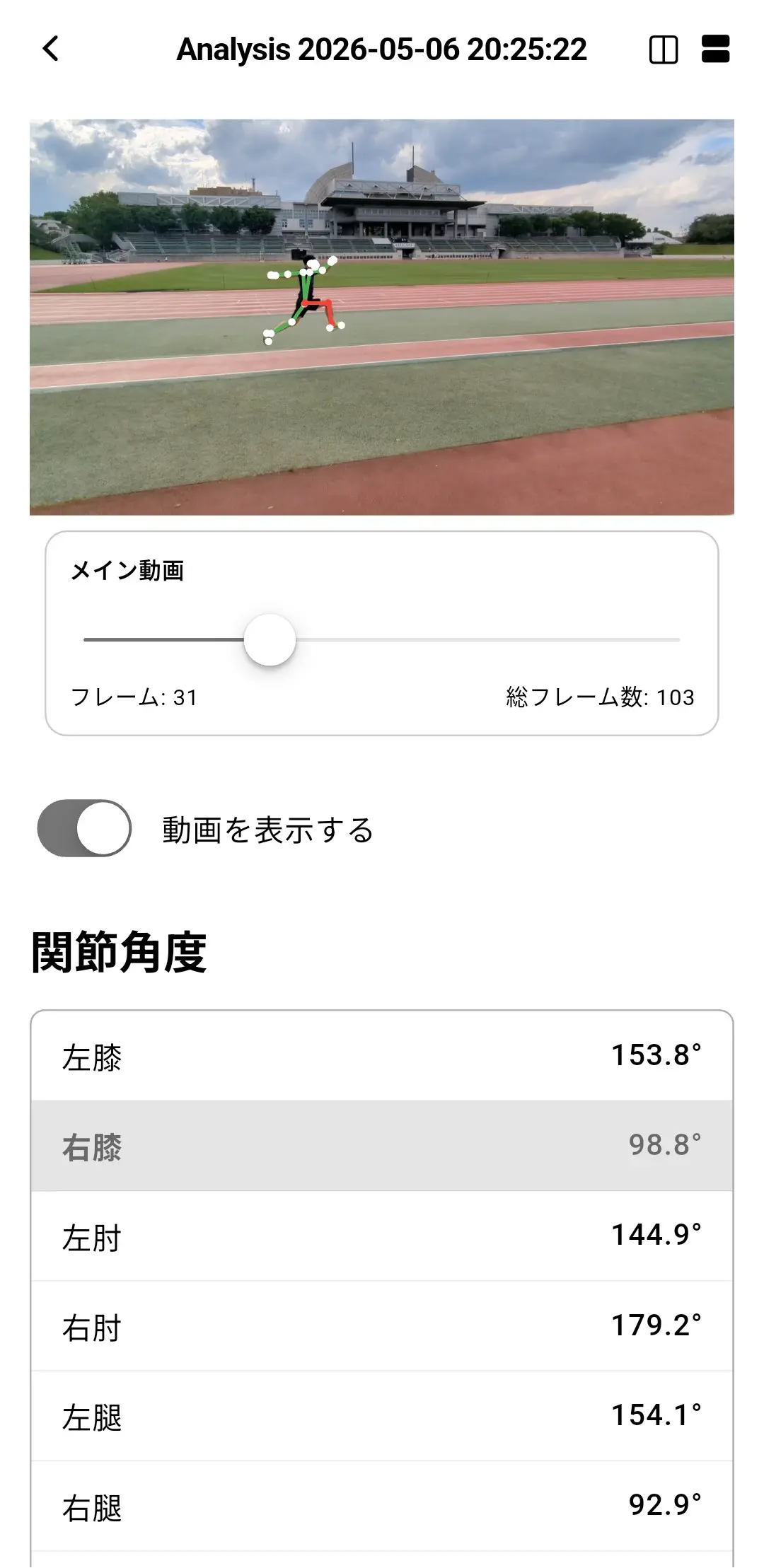
traqqer can automatically recognize a person in a video and overlay a skeletal model. You can advance the video frame by frame, compare two recordings, and display joint angles. Recording from the same position makes differences between sessions much easier to see.
What the Research Suggests
Looking beyond general impressions to changes in angles and loading can reveal small but meaningful differences. A review of trail-running injuries reported 1.4° greater peak rear-foot eversion in injured runners than in uninjured runners, along with 6–11% increases in impact measures during fatigued running. Small numerical differences can accumulate over repeated strides, which is why reviewing the same checkpoints under the same conditions matters.
- Injured runners showed 1.4° greater peak rear-foot eversion in one reported comparison
- Impact peaks and loading rates increased by 6–11% under fatigue
Source
Summary
The key to getting value from a form-check app is a repeatable process. Keep the order and checkpoints consistent, correct one issue at a time, and continue comparing recordings.
Start Your Journey with traqqer
traqqer is an AI-powered app that helps you build better habits.
Download now and transform your daily routines for a better life.
