How Coaches Can Use AI Analysis Tools to Standardize Feedback and Improve Results
Updated July 15, 2026
By the traqqer Editorial Team
Coaches rarely have enough time to watch every athlete as closely as they would like. Each athlete also has different needs, so coaching based only on personal experience can become inconsistent. A practical solution is to use AI analysis as a common first pass. The important point is that AI does not replace coaching. It provides a consistent foundation that makes coaching easier to repeat and compare.
The workflow is simple: standardize how videos are recorded, use AI to make issues visible, choose one priority for each athlete, and compare again under the same conditions. Once this sequence becomes routine, coaching moves from an impression formed in the moment to a measurable improvement process. A shared format is especially useful when several coaches work with the same team.
Use the same four steps each time:
- Standardize the recording setup
- Use AI analysis to identify issues
- Share one priority with each athlete
- Compare under the same conditions at the next session
Set the day’s observation theme before practice. After practice, share the evaluation and the one change to work on, then check that change at the next session. Too many corrections can leave an athlete unsure what to do, so one actionable priority is usually best. This also makes the feedback easier to accept and sustain.
Two common mistakes are changing the camera setup every time and never comparing with the previous recording. Without a consistent comparison, improvement is hard to demonstrate. An AI tool does not create results merely by being used, but a repeatable comparison process can make coaching much more efficient.
Avoid these three mistakes:
- Giving too many corrections at once
- Changing the recording conditions every time
- Failing to compare with the previous session
traqqer’s AI Video Analysis
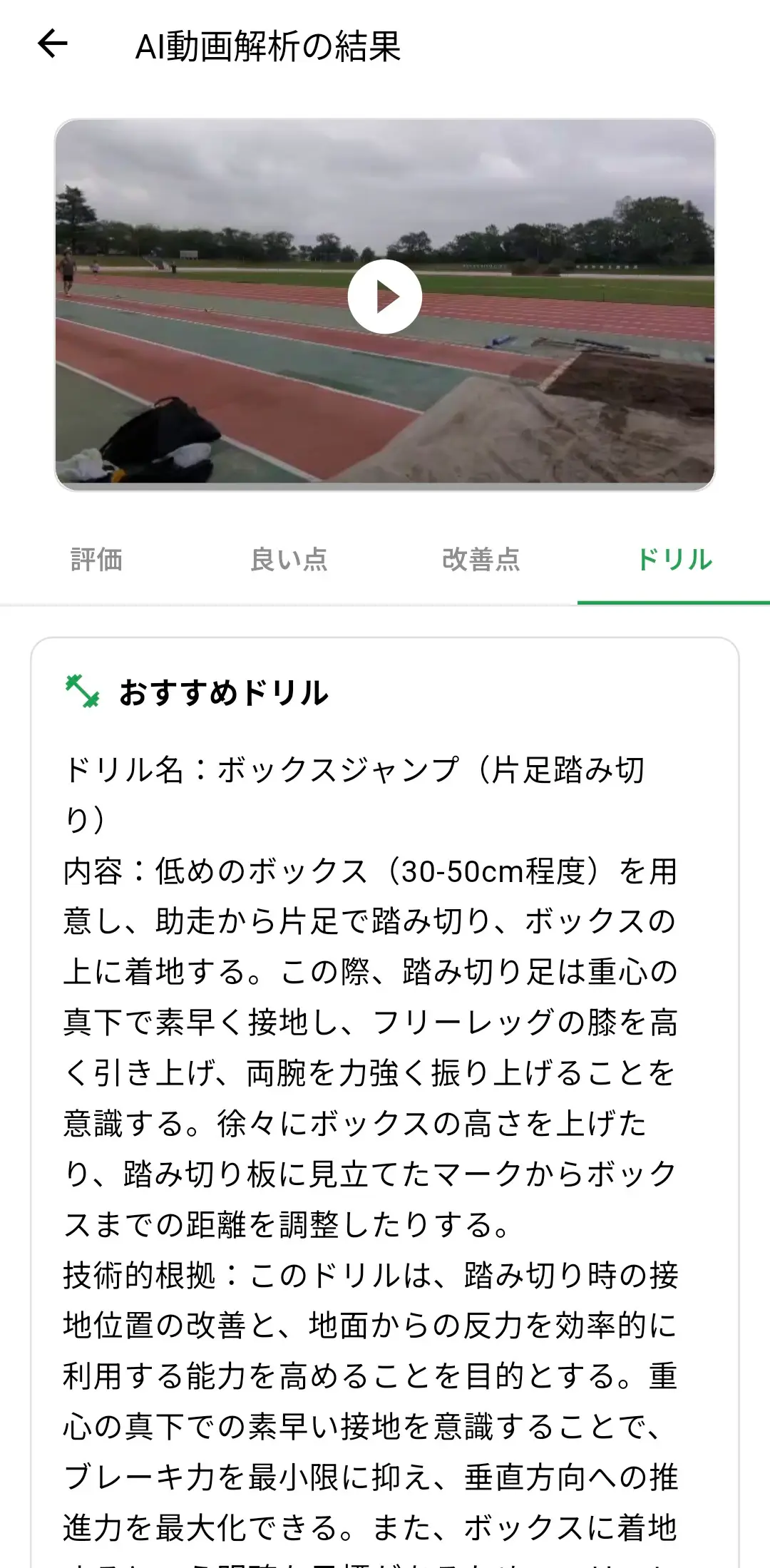
traqqer’s AI Video Analysis can support this workflow. After a video is uploaded, it returns feedback in four areas:
- Overall evaluation
- Strengths
- Areas for improvement
- Suggested drills
The system is tuned to explain the reasoning behind its improvement points and drills, making the results easier to turn into a next action. Coaches can use that first-pass analysis to prepare more focused feedback.
Why a Repeatable System Matters
Building a system that athletes can continue using matters because insufficient physical activity remains a worldwide problem. The World Health Organization reports that about 80% of adolescents do not meet recommended activity levels. The U.S. Centers for Disease Control and Prevention recommends at least 60 minutes of moderate-to-vigorous physical activity every day for children and adolescents ages 6–17. A team therefore needs more than a burst of motivation; it needs a process that helps athletes keep moving. Adding AI analysis to coaching can be one practical part of that process.
- About 80% of adolescents do not meet recommended activity levels (WHO)
- Children and adolescents ages 6–17 should get at least 60 minutes of activity per day (CDC)
Sources
- Physical activity — World Health Organization
- Physical Activity Guidelines for School-Aged Children and Adolescents — CDC
Summary
AI analysis can help coaches deliver more consistent feedback. Keep the camera setup consistent, narrow the focus to one issue, and compare again under the same conditions. Those three habits make improvement easier to see and coaching easier to repeat.
Start Your Journey with traqqer
traqqer is an AI-powered app that helps you build better habits.
Download now and transform your daily routines for a better life.
